What Makes a Great Flight Attendant

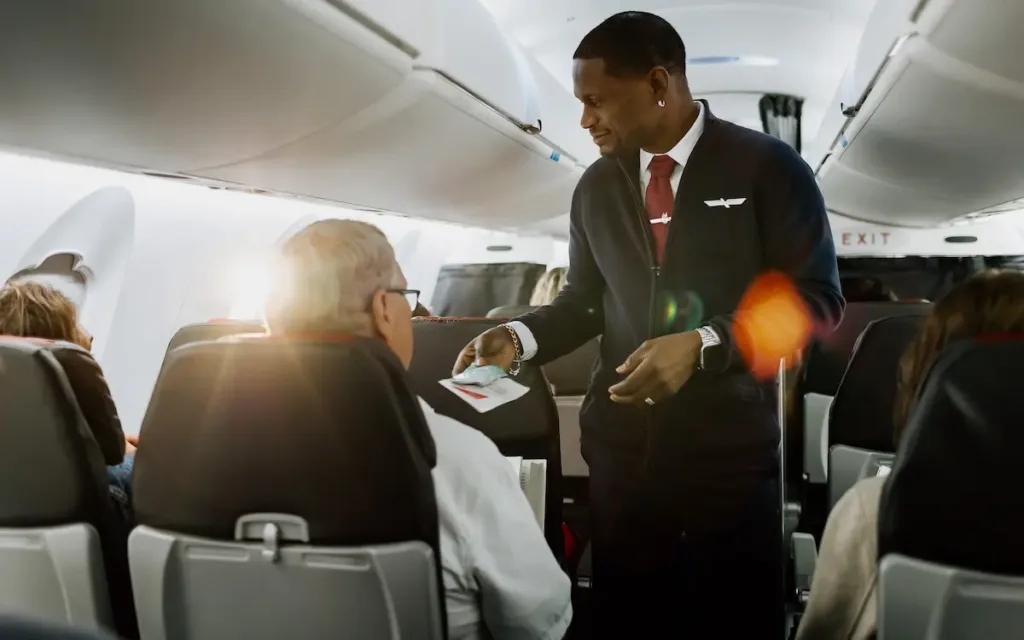
At PSA Airlines, flight attendants play a key part in delivering both safety and service on every flight. They are responsible for maintaining a secure cabin environment while also creating a positive and professional experience for every passenger on board. This balance requires a unique combination of technical knowledge, adaptability, and strong interpersonal skills.

Great flight attendants are defined by their ability to remain composed under pressure, communicate clearly, and respond effectively to changing situations. These qualities are reinforced through structured flight attendant training and ongoing development, helping team members perform with confidence in a fast-paced environment.

The Role of a Flight Attendant

The role of a flight attendant extends far beyond in-flight service. At PSA Airlines, flight attendants are responsible for ensuring compliance with safety regulations, conducting pre-flight checks, assisting passengers during boarding, and delivering clear passenger safety briefings.

During the flight, they monitor cabin conditions, respond to passenger needs, and remain prepared to manage any situation that may arise. Whether addressing routine passenger requests or responding to an unexpected event, their role requires focus, awareness, and professionalism at all times.

Communication Skills

Excellent communication skills are one of the most important aspects of effective performance in this role. Flight attendants must deliver safety instructions clearly, coordinate with crew members, and provide guidance to passengers in a way that is easy to understand.

Flight attendants are trained to communicate calmly and confidently, helping maintain order and providing reassurance when it is needed most.

Clear communication also supports teamwork within the cabin and flight deck, allowing crews to operate efficiently and maintain a coordinated approach throughout each flight.

Customer Service and Empathy

Delivering a high level of service is a key part of the passenger experience at PSA Airlines. Exceptional customer service skills allow flight attendants to engage with passengers in a professional and approachable way, creating a welcoming environment from boarding through arrival.

Empathy plays an important role in this process. Flight attendants regularly interact with passengers who may be traveling for a variety of reasons, including business, personal milestones, or challenging circumstances. Responding with understanding and respect helps create a positive experience and reflects PSA Airlines’ commitment to service excellence.

Problem-Solving and Adaptability

No two flights are exactly the same, and the ability to adapt is an essential skill for flight attendants. Unexpected situations can arise at any point, including delays, changes in passenger needs, or operational adjustments.

At PSA Airlines, flight attendants are trained to think quickly and respond effectively while maintaining professionalism. This includes resolving passenger concerns, adjusting service based on flight conditions, and supporting the crew during irregular operations.

Problem-solving is not limited to major situations. It also applies to everyday decisions that contribute to a smooth and efficient flight experience.

Teamwork and Collaboration

Flight attendants work as part of a larger team that includes pilots, the Integrated Operations Center, and fellow crew members. Effective teamwork is critical to maintaining safety and delivering a reliable experience across every flight.

At PSA Airlines, collaboration is built into daily operations. Flight attendants coordinate closely with one another to manage cabin responsibilities, support passengers, and respond to any changes during the flight.

This team-based approach allows crews to operate efficiently and maintain a high standard of service, even in demanding conditions.

Attention to Detail and Safety Awareness

Attention to detail is fundamental to the role of a flight attendant. Every procedure, from pre-flight checks to in-flight monitoring, requires precision and consistency.

Safety is the top priority at PSA Airlines, and flight attendants are responsible for following established safety procedures at every stage of the flight. This includes verifying safety equipment, monitoring cabin conditions, and remaining alert to any potential concerns.

Maintaining strong safety awareness supports both passenger well-being and regulatory compliance, reinforcing the importance of this essential skill in daily operations.

Physical and Mental Stamina

The role of a flight attendant requires both physical and mental endurance. Flight attendants often work long hours, manage irregular schedules, and operate across different time zones.

At PSA Airlines, maintaining energy and focus throughout each flight is critical. Flight attendants must remain attentive, responsive, and professional from boarding to arrival, regardless of the length or complexity of the trip.

This level of stamina supports reliable performance and helps maintain a high standard of service across all flights.

Cultural Awareness and Professionalism

PSA Airlines serves a diverse range of passengers, making cultural awareness an important part of the role. Cabin crew members interact with individuals from different backgrounds and must approach each interaction with respect and professionalism.

Maintaining a polished appearance, demonstrating professionalism, and communicating respectfully are all part of delivering a uniform experience that reflects the PSA Airlines brand.

These qualities contribute to a welcoming environment and reinforce the airline’s commitment to service excellence.

Building a Career as a Flight Attendant

Developing strong flight attendant skills requires a combination of training, experience, and dedication. At PSA Airlines, these skills are supported through structured programs and a team-focused environment that prioritizes safety, service, and professional growth.

For those interested in pursuing this career path, PSA Airlines offers opportunities to build these key skills and contribute to a team that values both performance and service. If you are ready to take the next step, you can apply to be flight attendant and learn more about becoming part of our team.

In honor of Asian American and Pacific Islander Heritage (AAPI) Month

A girl from a 32-mile island

First Officer Brenna Myers doesn’t make a big deal of firsts. But she thinks about them.

Every time she walks into an airport in her uniform, the same thought finds her: This tiny little island girl is doing it. Not as a boast. More like a quiet conversation with the version of herself who grew up on a 32-mile island in the Pacific, where Chamorro pilots existed but were so few and so far from view that the flight deck never felt like a place that could belong to her.

She is Chamorro — indigenous to Guam — and she is the first pilot from Guam in the PSA’s history. She holds that distinction the way her culture taught her to hold everything that matters — not for herself, but as a reflection of the people and the place that made her.

The planes were always there. The pilots weren’t

Growing up in Guam, aviation was simply in the fabric of life. You flew to reach family on neighboring islands. You flew to reach the mainland for college. The planes were always there. The pilots who flew them almost never were — not anyone from the island, anyway.

Brenna studied biochemistry in college, figuring medicine was a visible enough path. She knew dentists back home. She didn’t know pilots. It wasn’t until she moved back to Guam after graduation, took an operations job at a small charter company, and started talking with the pilots coming through that the dream she’d quietly carried finally had a shape. She took a discovery flight. That was it. 

Getting her private pilot certificate in Guam was as far as the island’s aviation infrastructure could take her at the time. The next step meant leaving — something that’s changing as the community has grown significantly since Brenna started her journey. She landed in South Carolina, finished her ratings, built her hours, instructed more than 50 students with a 100% first-attempt check ride pass rate, and waited for the right door.

She knew PSA was that door before she ever set foot in the building.

The message that found her anyway

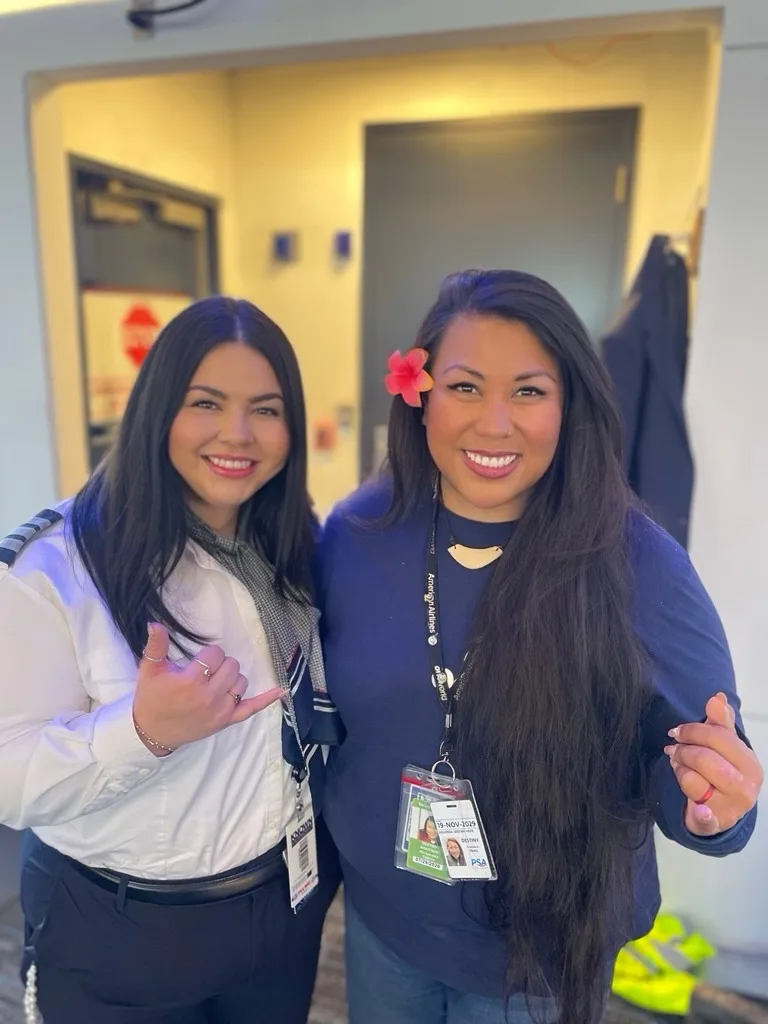
That certainty had a name: Destiny Siguenza.

Destiny is an MSS recruiter at PSA, a role she believed in enough to follow when the company relocated its headquarters from Dayton, Ohio to Charlotte. She is also Chamorro, also from Guam, and she carries the same quiet disbelief-turned-gratitude every day she walks into the office. Someone from this 32-mile island, she thinks, in a corporate role, part of one of the biggest airlines in the world.

In 2023, a year before Brenna joined PSA, Destiny traveled back to Guam to represent PSA at Wings in Paradise, the first aviation event held on the island. A typhoon had other plans. The event was canceled. Destiny continued anyway, and the island’s small aviation community wasn’t about to let Destiny’s trip go to waste. They pulled together an impromptu session at a local hanger, giving her a room and a microphone. She went on the island’s radio and broadcast to whoever would listen about the different careers aviation had to offer. She was hoping to reach one person. 

The message found Brenna. Yet beyond the words, Brenna heard a Chamorro woman who loved where she worked, and that was all she needed.

“I knew that if another Chamorro girl loved where she worked, I knew that I would feel like it was home too,” Brenna said.

She reached out to Destiny, who connected her with PSA’s cadet recruiter. She applied, spent nearly a year building hours as a cadet, and earned her class date. Not long after, the recruiter looped back to Destiny with news: Brenna had been assigned to a class. She was on her way.

We are a product of our people 

They were strangers who had quietly shaped each other’s path long before they ever stood in the same room. This story brought them together. That’s not unusual for people from Guam, where community isn’t a concept so much as a practice. Where hospitality is known as the Hafa Adai spirit, a way of making things good for one another, and where your successes are understood as a reflection of the people who raised you, fed you and sent you off with their full support.

Getting home isn’t simple when you’re from Guam. The island sits four hours from Japan, eight from Honolulu and is served by a single U.S.-based airline. Brenna has landed a plane there before, during early training, but never as a professional pilot with passengers and crew and everything that uniform means.

That’s the dream. Not just to fly, but to one day touch down in Guam on a route that serves her island and let some kid see a Chamorro woman walk off that flight deck. The same kid she once was, who rarely saw this path represented and grew up not knowing it could be hers too.

It says everything about why she flies.

Not for the credential. For the island. For the ones coming next.

When people think about pilots, they often picture the Captain in charge but First Officers play an equally critical role in every flight.

Here’s what you might not know about what they do:

  • They share flying duties with the Captain
    First Officers actively take the controls and help operate the aircraft throughout the flight.
  • They’re fully qualified to land the aircraft
    First Officers are trained and certified pilots who regularly perform landings.
  • They handle preflight and post-flight inspections
    From checking systems to reviewing the aircraft’s condition, they make sure everything is ready to go.
  • They monitor aircraft systems in real time
    Throughout the flight, they verify that all systems are operating safely and efficiently.
  • They manage and support communications
    First Officers work closely with air traffic control and assist with clear, accurate communication.

It’s a role defined by teamwork and precision. And on every flight, two fully qualified pilots are up front working together to get you where you’re going safely.

Interested in a career as a First Officer at PSA? Explore our pilot opportunities today.

Follow us on socials.

Standing near Gate C13 at Charlotte Douglas International Airport (CLT), Bri Wilson had to remind herself where she was.

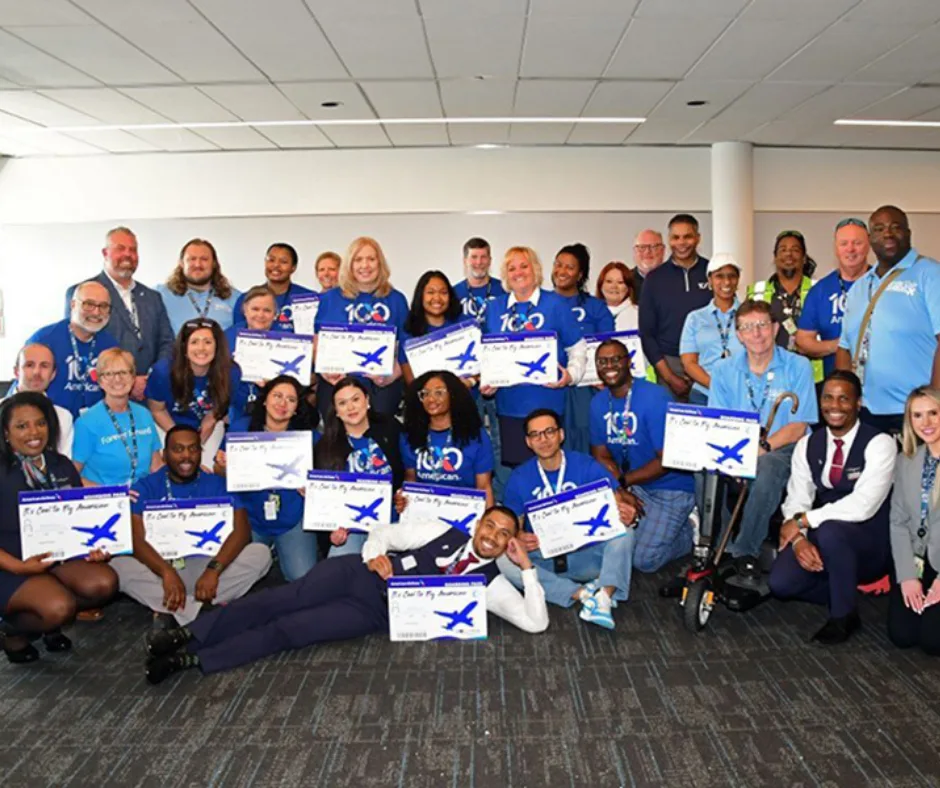
It didn’t feel like a typical airport gate. There were decorations and snacks. A photo booth. Laughter. People lining the jet bridge, clapping and cheering.

And nearby, a group of children were practically bouncing with excitement.

Bri, an air ops data analyst at PSA, spent her Saturday volunteering at “It’s Cool to Fly American,” a special event, supported by American Airlines, designed to help children with autism experience air travel in a safe, supportive environment — without ever leaving the ground. Her experience comes during National Volunteer Month, a time when organizations recognize the impact of service in their communities.

A familiar space

Bri learned about the opportunity through a call for volunteers on the myPSA portal. It caught her attention immediately.

“For most of us, especially those who work in aviation, the airport is second nature,” she said. “But for many families it can be overwhelming.”

That perspective is personal for Bri. Her younger brother is on the autism spectrum, and airports have long been a challenging environment for their family.

“When I read about what the event supported, it felt like the opportunity was written for me,” she said.

A different kind of departure gate

The morning of the event, Bri felt energized and grateful.

“I felt privileged to be there,” she said. “And proud to work for a company that supports something like this.”

Volunteers met near the American Airlines departure terminal to check in, receive assignments and prepare for the day. From there, families were guided through an experience designed to reflect the rhythm of a typical airport visit, while maintaining a calm, supportive space where the children could engage with the environment in a way that felt both real and reassuring.

TSA also partnered in that effort, opening a dedicated lane that mirrored a real security checkpoint while allowing families the time and space they needed.

Bri began the day as a sign holder, helping families navigate through the terminal, answering questions and providing support before joining the rest of volunteers at Gate C13.

Executives from American Airlines shared brief remarks before families boarded a simulated flight. Bri was asked to sit in an exit row to help monitor the cabin.

During the experience, the captain calmly talked the families through each step of the journey, preparing them for announcements, engine sounds and what to expect next so nothing came as a surprise. The aircraft taxied, simulated takeoff and returned to the gate.

But it wasn’t the “flight” itself that stayed with Bri.

The moment that stayed

It was when the children stepped off the plane.

“Their faces were pure joy,” Bri said. “Some were running down the jet bridge. Most didn’t want to leave the plane.”

Earlier, some children had been hesitant — even scared. But by the end, most were taking photos with the captain, confident and smiling, with proud parents watching nearby.

“That transformation was incredible to witness,” Bri said. “These kids overcame a real fear, and we got to be part of that.”

A broader impact

What began as an employee idea 10 years ago now brings together volunteers from across the country — frontline and HQ team members alike.

What surprised Bri most wasn’t the scale; it was how naturally people connected.

Even passersby stopped to watch, asking questions about the event. It was a reminder, she said, that the impact stretched beyond the families participating.

Would she volunteer again?

“100%,” she said.

Her advice to teammates considering volunteering is simple.

“Don’t overthink it, just go for it. You might get more out of it than you expect,” she said.

When asked to sum up the experience in one sentence, she didn’t hesitate.

“It was deeply fulfilling, both personally and professionally, and it reinforced why I love working at PSA.”


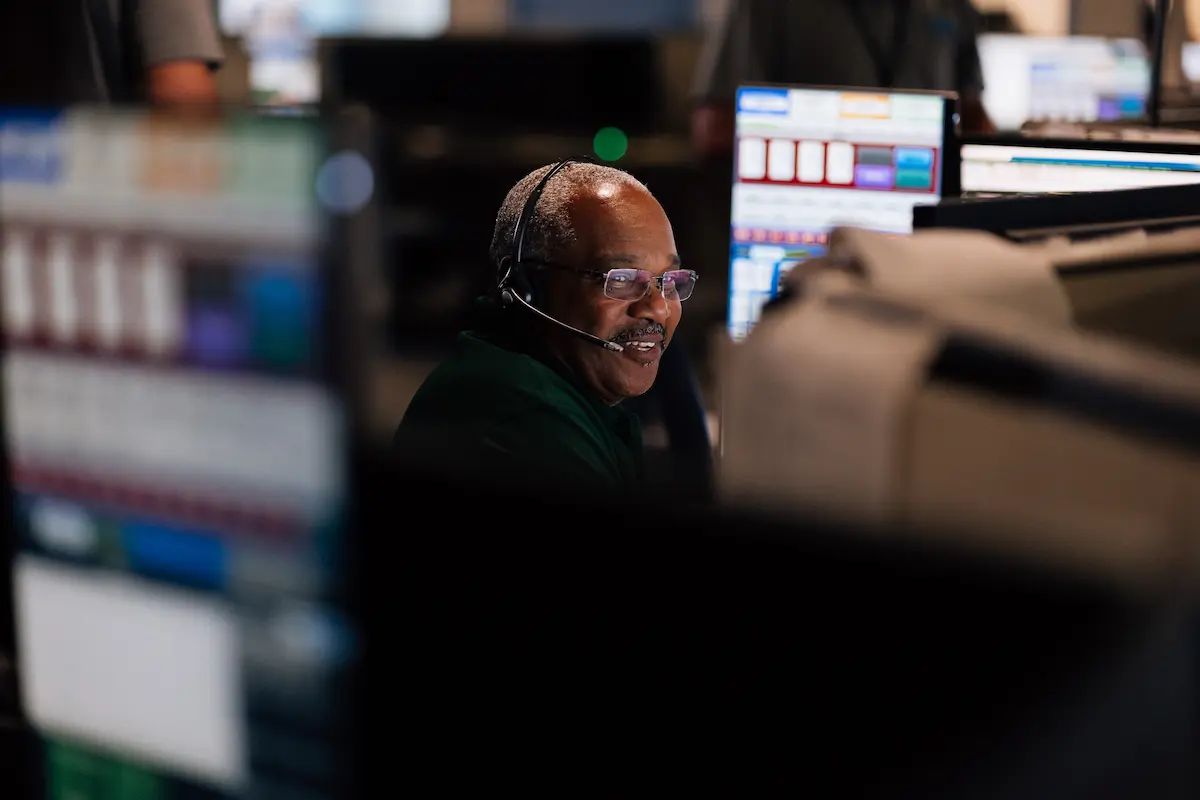
Behind every smooth departure and safe arrival is a team working well beyond the cabin and cockpit. One of the most important players in that process is the flight dispatcher. At PSA Airlines, dispatchers are trusted aviation professionals who help every flight take off with a solid plan and constant support. They play a vital part in daily operations, working closely with pilots, crews, and operations teams to keep flights moving safely and efficiently.

Here, we’ll answer the question, “what do flight dispatchers do” and go over why their work matters so much to commercial aviation.

What Is a Flight Dispatcher?

A flight dispatcher is a licensed aviation professional who shares legal responsibility for the safety and planning of a flight. In simple terms, dispatchers help plan each flight before departure and support it until the aircraft is safely parked at the gate. They review weather, fuel needs, routing options, and operational limits to build a flight plan that works for both flight safety and efficiency.

In the United States, dispatchers operate under Federal Aviation Administration regulations, including FAR Part 121 for commercial airlines. They hold an FAA Aircraft Dispatcher Certificate, which allows them to release flights jointly with the captain. This means an aircraft cannot depart without approval from both the dispatcher and the pilot in command. That shared responsibility is a key part of how airlines manage risk and maintain high operational standards.

The Dispatcher’s Core Responsibilities

The work of an aircraft dispatcher touches nearly every phase of a flight. While no two days look the same, the core responsibilities stay consistent and focused on planning, monitoring, and support.

Flight planning and routing are at the heart of the job. Dispatchers evaluate wind patterns, weather systems, air traffic flow, and airport conditions to select the best route for each flight. The goal is to balance safety, fuel efficiency, and on-time performance while staying within all operational rules.

Weight and balance calculations are another major responsibility. Dispatchers confirm that each aircraft operates within approved limits based on passenger counts, cargo, fuel load, and the specific aircraft assigned. These calculations help crews maintain proper performance during takeoff, flight, and landing.

Fuel planning requires careful judgment. Dispatchers calculate the fuel needed for the planned route, alternate airports, expected weather, and potential delays. This planning accounts for required reserves and real-world conditions that may change throughout the day.

Weather analysis plays a constant role in dispatch decisions. Dispatchers review METARs, TAFs, and NOTAMs to identify storms, turbulence, icing, and airport restrictions. They look beyond departure conditions and assess the entire route and destination window.

Flight release and legal authority are defining aspects of the job. Dispatchers issue the official dispatch release, which authorizes the flight to operate. This document confirms that all planning requirements have been met and that the flight complies with regulations.

Once the aircraft is airborne, in-flight monitoring begins. Dispatchers track progress in real time, watch for changing weather or airport conditions, and assist crews with reroutes, diversions, or delay decisions if needed. When unexpected events occur, dispatchers help crews adapt quickly and calmly.

How Dispatchers Work with Pilots & Crew

Dispatchers and pilots function as a unified team. Before departure, they review flight plans together, discuss weather concerns, and agree on fuel and routing strategies. This collaboration allows both sides to bring their expertise to the table and build a shared understanding of the flight ahead.

During the flight, dispatchers stay in communication with crews through approved channels. If weather develops along the route or conditions change at the destination, dispatchers provide updated information and options. They may suggest alternate routes, revised arrival plans, or delay strategies that support safe decision-making.

This partnership creates an operational safety net. Pilots focus on flying the aircraft, while dispatchers maintain a broader system view across multiple flights. Together, they make informed choices that support passengers, crews, and the airline as a whole.

The Importance of Safety & Regulations

Safety and compliance guide every dispatcher decision. Under FAR Part 121, dispatchers and captains share joint responsibility for the operational control of a flight. This dual accountability adds an extra layer of review and oversight before and during each flight.

Regulations define how dispatchers plan flights, calculate fuel, assess weather, and monitor progress. They also require clear documentation and communication at every stage. By following these standards, dispatchers help airlines manage risk, respond to changing conditions, and maintain consistent operational performance across the network.

Technology & Tools Dispatchers Use

PSA’s dispatchers rely on advanced technology to support fast, accurate decisions. Dispatchers use flight planning software to evaluate routes, fuel needs, and performance data. Real-time tracking systems allow them to follow aircraft progress and spot developing issues early.

Weather tools provide detailed views of storms, winds, and forecasts across large regions. Communication platforms connect dispatchers with pilots, maintenance teams, and other airline operations groups, allowing information to flow quickly when it matters most. These tools help dispatchers stay proactive rather than reactive.

Dispatcher Skills & Certifications

Becoming a flight dispatcher requires a mix of technical knowledge and practical judgment. Candidates complete specialized training programs and earn an FAA Aircraft Dispatcher Certificate. This training covers meteorology, regulations, aircraft systems, navigation, and flight planning.

Strong decision-making skills are essential. Dispatchers analyze complex information, manage time-sensitive situations, and communicate clearly under pressure. Attention to detail, teamwork, and a calm approach support success in this fast-paced environment.

Why Flight Dispatchers Matter in Aviation

Dispatchers are a vital link between planning and execution in commercial aviation. Their work supports safe operations, reliable schedules, and informed decision-making across the airline. At PSA Airlines, flight dispatch professionals help keep our flights moving and our crews supported every step of the way.

If you are interested in a behind-the-scenes career that makes a real impact, check out the latest opportunities across our airline operations teams. You can also learn more about the aircraft fleet our teams support every day.

Let your career take off and make PSA your career destination.

Airline Careers

Charlotte, N.C., April 20, 2026 – PSA Airlines, a wholly owned subsidiary of American Airlines Group and a leading regional airline, announced today the appointment of Brad R. Decker as Vice President, Technical Services.

Decker brings more than a decade of experience across the commercial airline industry, with a strong background in engineering, maintenance program development and operational reliability. In this role, he will provide leadership across powerplant, systems, structures, reliability, technical services and maintenance programs, supporting PSA’s continued growth and operational performance.

Most recently, Decker served as Managing Director of Engineering at Allegiant Air, where he led engineering teams focused on maintenance optimization, reliability initiatives and cost‑saving programs. His work included PMA and DER part sourcing, engine build strategies, entry‑into‑service planning for the Boeing 737 MAX, and direct support to line maintenance operations. Prior to Allegiant, Decker spent nearly a decade at American Airlines in progressively responsible engineering roles, providing airframe and powerplant support across multiple fleets and leading entry‑into‑service efforts for several aircraft types.

Throughout his career, Decker has developed custom maintenance procedures to reduce aircraft downtime and implemented engineering solutions that delivered measurable safety, reliability and cost benefits. His technical experience spans Airbus, Boeing, Embraer and ATR aircraft and has required close coordination with the Federal Aviation Administration, maintenance, repair and overhaul (MRO) partners, and key suppliers.

Decker holds a Bachelor of Science in mechanical engineering from The University of Texas at Arlington. He is a former United States Marine Corps KC‑130 flight mechanic and flight engineer, where he gained hands‑on aviation maintenance and operational leadership experience.

As PSA continues to grow with a focus on operational excellence, Decker’s technical expertise and leadership will play a key role in advancing maintenance performance and engineering discipline across the organization.

Charlotte, N.C. — PSA Airlines President and Chief Executive Officer Dion Flannery has been named a recipient of the Charlotte Business Journal’s annual Most Admired CEO award, recognizing outstanding leadership, strategic vision, and positive impact on the regional business community. 

 The award honors executives who demonstrate exemplary leadership, inspire their teams, and contribute meaningfully to their organizations and the Charlotte region. Flannery was recognized for guiding PSA Airlines through continued growth while maintaining a focus on safety, operational excellence, and a people-first culture. 

 “We’re honored that Dion has been recognized by the Charlotte Business Journal for his leadership and contributions that benefit PSA, the American Airlines Group, and the community in our new home in Charlotte. This recognition reflects the dedication and professionalism of the entire PSA team,” said PSA Vice President of People, Christine Hollanshead. “We are proud of what we continue to build together and grateful for the team members who make our success possible every day.” 

 The Charlotte Business Journal’s Most Admired CEO awards are conferred annually following an independent selection process that highlights leadership across a wide range of industries. 

Women’s History Month asks us to look closely at the many ways women have shaped our industry — not only through visible milestones, but through the steady, intentional work that holds aviation together. Captain Amy Carson’s story offers a reminder that progress isn’t always loud. Sometimes, it’s built in simulator bays, checklists and standards that keep passengers safe and pilots prepared.

Even today, women remain a small fraction of airline pilots, a number that has grown slowly over the past two decades. But Amy’s career is living proof that visibility — paired with expertise — changes what feels possible.

Chasing her dream

For Captain Amy Carson, aviation has always been about possibility, long before she understood the path to the cockpit.

As a child, she dreamed of becoming an astronaut, captivated by what she saw on television and inspired by the boldness of exploration. There were pilots in her family too, including a great uncle who flew for Eastern Airlines, and the stories he told made aviation feel fascinating, even if it didn’t yet feel accessible.

That clarity came later, during her time as a flight attendant with America West. One day, on a ferry flight, Amy stepped into the cockpit — and both pilots were women.

“That was the moment,” she recalls. “I remember thinking, this fits me.”

There was no formal leave of absence available for flight training, so Amy made a choice that would define her career. She quit her job and went to flight school.

Inside the simulator: Where standards are set

Amy’s journey eventually brought her to PSA, where she spent more than four years as a first officer before stepping into a role that expanded her impact well beyond the flight deck.

Today, she serves as a simulator instructor and Aircrew Program Designee (APD) — a role that carries significant responsibility and trust.

Becoming an APD requires years of experience, including line qualification, fleet expertise, captain qualification, hundreds of hours of pilot‑in‑command time, and service as both a simulator instructor and proficiency check airman.

“It’s a big responsibility that I take great pride in,” Amy explains. “When someone completes a checkride with me, I issue their Airline Transport Pilot certificate with the CL‑65 type rating. My name is on their license.”

That checkride marks the final evaluation before a pilot flies revenue passengers.

“If something happens later,” she added, “it comes back on me. So safety is everything.”

Training is about teaching — not catching mistakes

One of the most common misconceptions about simulator instructors, Amy said, is that the role is purely evaluative.

“We’re a training department,” she emphasized. “I want pilots to leave having learned something they can use every day.”

Training begins with simulator sessions focused on maneuvers, failures and profiles. From there, pilots move into Line Oriented Flight Training (LOFT) — full, point‑to‑point flights designed to replicate real‑world airline operations.

“That’s where we teach them how to be airline pilots,” Amy said.

Her approach in the sim is shaped by patience, approachability and a belief that learning often happens through mistakes — not by stepping in too quickly to fix them.

Motherhood further influenced that mindset. Amy said becoming a parent made her more patient and better able to meet people where they are — a quality that carries into every simulator session.

Why she stays

Today, Amy sees an industry evolving. Technology is advancing rapidly — from improved simulation to potential virtual training tools — and while pilot demand may fluctuate, one trend gives her confidence: more women are entering aviation.

Asked if her twin daughters, now 13, should pursue a path to the cockpit?

“I would absolutely encourage them,” Amy says without hesitation. “I love my job.”

What keeps her at PSA, she says, is the culture.

“The people care. There are hard days — we’ve been through tragedy — but if someone raises a concern, it’s taken seriously. That’s culture. And that’s why I stay.”

A quiet standard

Asked whether she thinks about her place in the legacy of women in aviation, Amy is candid.

“I don’t see myself as a woman in the cockpit — just a pilot,” she said. “I want to be here because I’m competent and working hard.”

It’s a perspective grounded in professionalism rather than recognition — and one that mirrors her approach every day. Inside the simulator, during checkrides and through the standards she helps enforce, Amy focuses less on visibility and more on responsibility.

The result is an influence felt by every pilot she trains — whether they know it or not.

Your pilot logbook is one of the most critical documents when applying for a position at PSA Airlines. A well-organized, accurate logbook not only showcases your attention to detail but also ensures a smooth review process.

Why Logbooks Matter in Pilot Careers

A flight logbook serves as your official record of flight experience. Recruiters, training departments and regulatory agencies review it to verify qualifications, confirm minimum hours and assess progression. The FAA expects entries to be accurate, complete and compliant with regulations. When we review applications, your logbook helps us understand your experience level, training background and readiness to join team.

To help you stand out during the application process, here are six essential flight logbook tips from our recruiters:

  1. Log Flight Times Accurately

    All flight times must be recorded in compliance with FAA regulations. Accuracy means precise block-in and block-out times, correct use of PIC and SIC designations and complete entries for aircraft type and conditions. Even small inconsistencies can raise questions during review.
    Clean, accurate records demonstrate professionalism and attention to detail. Exaggerating or estimating hours can delay or jeopardize your application.
    Organizing By Phase of Flight and Experience Type
    Organize your entries so they clearly reflect experience categories such as PIC, SIC, cross-country, night and instrument time. Grouping experience logically allows recruiters to quickly assess qualifications during interviews. Well-structured aircraft logbooks make it easier to confirm required totals and review your progression as a pilot.

  2. Total Every Column
    Ensure every column of every page is totaled, even if you didn’t log new hours. Use a ‘0’ for columns without new entries and carry over the most recent totals to the new page. This consistency keeps your logbook clear and easy to review.

    Detailed Landing and Instruction Entries
    Record detailed landing information, including day and night landings and any tailwheel operations when applicable. If you received instruction, note who provided it and what maneuvers were practiced. These details give context to your logged hours and demonstrate structured training progression.
  3. Use Black or Blue Ink
    All pilot logbook entries should be made in black or blue pen, and each page must be signed. This supports professionalism and standardization across your pilot logbook.
  4. Keep It Legible
    Your pilot logbook must be easy to read. If it’s illegible, recruiters may not be able to complete the review, which could delay your application.

    Using Digital and Paper Logbook Strategies Together
    Many pilots use electronic logbooks such as LogTen while maintaining a paper backup. A digital logbook can simplify totaling columns, tracking currency and generating summaries for interviews. Keep digital files updated and export them in commonly accepted formats such as PDF when applying.
    Even when using electronic logbooks, maintain a paper record as a backup. Bringing both formats to an interview demonstrates preparation and professionalism.
  5. Meet Minimum Hour Requirements
    Before applying, double-check that you meet FAA and PSA’s minimum hour requirements for the position. Staying within the allowed timeframe ensures you’re eligible.
    Common Logbook Mistakes to Avoid
    Common errors include military time conversion mistakes, omitted instructor signatures and incorrect airport identifiers. Review totals carefully and correct discrepancies before submitting your application. Small errors can create confusion that is easily avoided with a thorough review.
  6. Tab Out Check Ride Failures

    Clearly mark any check ride failures in your logbook. Transparency is key, and recruiters will appreciate your honesty. A clean, organized and accurate logbook reflects the same discipline required in flight operations.

Presenting Your Logbook with Confidence

By following these tips, you’ll not only present a professional logbook but also set yourself up for success in the recruitment process. If you are exploring airline careers, strong documentation is one step toward joining PSA Airlines. Learn more about our opportunities and take the next step toward flying with us.

CHARLOTTE, N.C. – Central Piedmont Community College and PSA Airlines today announced a new partnership to prepare more students for highdemand, highwage careers in the aviation sector in the Charlotte region and beyond. 

Nationally and regionally, the aviation industry faces rising demand for pilots, aviation maintenance technicians, drone operators, air traffic control specialists, and other skilled roles. As an American Airlines hub serving 13 other carriers and home to one of the world’s busiest airports, Mecklenburg County is uniquely positioned to develop the skilled talent needed to fuel the region’s growing aviation sector.   

With support from PSA Airlines, Central Piedmont is expanding its investment in modern equipment and curriculum that will strengthen the pipeline of trained aviation professionals to sustain regional employers. Through the collaboration, Central Piedmont students will gain access to internships and PSA facilities to support handson learning. PSA will also provide technical expertise and professional development opportunities for college faculty.  

 “This partnership reflects our commitment to strengthening the aviation workforce in one of the fastestgrowing regions in the country,” said Christine Hollanshead, Vice President of People of PSA Airlines. “We’re excited to help develop the next generation of aviation professionals by expanding access to handson training, modern equipment and scholarship support.” 

Through this new partnership, PSA Airlines will establish the PSA Airlines Scholarship Fund to support students pursuing aviationrelated fields, as well as the PSA Airlines Program Fund, which will provide resources to strengthen academic programs as the college. These funds will complement the airline’s broader efforts to enhance and expand Central Piedmont’s aviation programs.  

“PSA’s investment in student success is clear, and we’re proud to partner with them to develop talent for one of our region’s most essential and fastestgrowing industries,” said Dr. Kandi Deitemeyer, president of Central Piedmont. “Together, we are creating new opportunities for our students while strengthening the aviation workforce that keeps our community moving.” 

Central Piedmont currently offers a range of industry-recognized aviation training opportunities, including a Private Pilot Ground School and drone instruction, with additional coursework in development. Collaboration with PSA Airlines is an important part of the college’s strategy to further invest in the future of aviation education. The college is also pursuing resources to establish a comprehensive aviation maintenance program aligned with regional workforce and economic development needs. 

About Central Piedmont 

Central Piedmont Community College is highly accessible and convenient to people of all ages who seek a real-world, affordable, hands-on education that will transform their lives and strengthen the economic, social, and cultural environment of Mecklenburg County. Central Piedmont is also a smart investment. At a fraction of the cost, students learn by doing, receiving a combination of technical and soft-skills training from quality faculty who prepare them to enter the workforce and make a difference in their family, business, community, and world. Founded in 1963, Central Piedmont Community College has eight locations throughout Mecklenburg County, offering more than 300 degree, diploma, and certification programs; customized corporate training; market-focused continuing education; and special interest classes. For more information, visit cpcc.edu, or connect with the college on LinkedInFacebook and Instagram. 

About PSA Airlines 

PSA Airlines, a wholly owned subsidiary of American Airlines Group, is based in Charlotte, N.C. and operates an all-jet fleet of dual-class MHI regional jet aircraft. The company’s over 5,000 team members operate an average of over 730 daily flights to over 100 destinations. PSA has flight crew bases in Charlotte, N.C.; Dallas-Fort Worth; Dayton, Ohio; Philadelphia; and Washington, D.C. PSA has maintenance facilities in Dayton; Canton/Akron, Ohio; Cincinnati; Charlotte, Dallas-Fort Worth; Greenville, S.C.; Knoxville, Tenn.; Norfolk, Va.; Pensacola, Fla.; and Savannah, Ga. PSA has 60 MHI CRJ700 aircraft and 87 MHI CRJ900 aircraft, with seven additional recently acquired CRJ900 aircraft in the inductions process; PSA’s fleet will total 154 once all aircraft have been inducted later this year. For more, visit www.psaairlines.com. 

###