


Stay Current PSA Newsroom
August 26, 2026
What to Expect from PSA Airlines’ Initial Flight Attendant Training Program
Becoming a PSA Airlines Flight Attendant starts with learning how to protect, support and care for every passenger. PSA’s initial flight attendant training program prepares new team members to meet that responsibility through safety instruction, aircraft familiarization, emergency practice, service exercises and team-based learning.
PSA is a wholly owned subsidiary of American Airlines and operates an all-jet regional fleet within the American Eagle network. The four-week program helps trainees build the knowledge, judgment and practical skills needed to serve aboard PSA’s CRJ700 and CRJ900 aircraft.
How Do You Enter PSA’s Flight Attendant Training Program?
The first step is to review PSA’s qualifications and submit an online application. Candidates should be at least 20 years old, meet PSA’s education and customer service requirements, have the right to work in the United States and possess a valid passport or be able to obtain one.
Qualified applicants may advance through video and in-person interviews. Candidates who receive and accept an offer must also complete required pre-employment screening before training. PSA’s guide to becoming a Flight Attendant provides additional application and interview guidance.
How Long Is PSA Flight Attendant Training?
PSA’s initial Flight Attendant training program lasts four weeks and may include some weekend sessions. Training is paid and takes place in Charlotte, North Carolina, with hotel accommodations included
The schedule is fast-paced because trainees must learn a substantial amount of information in a short time. Full attendance, punctuality and active participation are essential. Candidates should arrange their personal responsibilities before leaving for Charlotte so they can give the program their full attention.
Safety Comes First in Flight Attendant Training
A Flight Attendant’s primary responsibility is passenger safety. Although service is an important part of the job, Flight Attendants must first be prepared to prevent problems, recognize hazards and respond calmly when conditions change.
Flight Attendant safety training may cover emergency procedures, security responsibilities, aircraft exits, evacuation practices and the proper use of onboard equipment. Trainees also learn how clear communication and careful observation support safe, reliable operations.
This safety-first approach reflects PSA’s culture, which centers on providing a safe, reliable and caring experience for customers and fellow team members every day.
Emergency Drills and Medical Response Skills
Classroom instruction provides important knowledge, but trainees must also show that they can apply what they learn. Hands-on exercises and emergency procedures training help them practice responding under pressure while following established commands and procedures.
Training may address situations such as evacuations, smoke or fire, turbulence, decompression and other onboard emergencies. Medical preparedness is another important area. Trainees learn how to assess an ill or injured passenger, communicate with the flight deck and use available medical resources.
These exercises help turn written procedures into practical skills that Flight Attendants can recall when every second matters.
Learning the CRJ700 and CRJ900
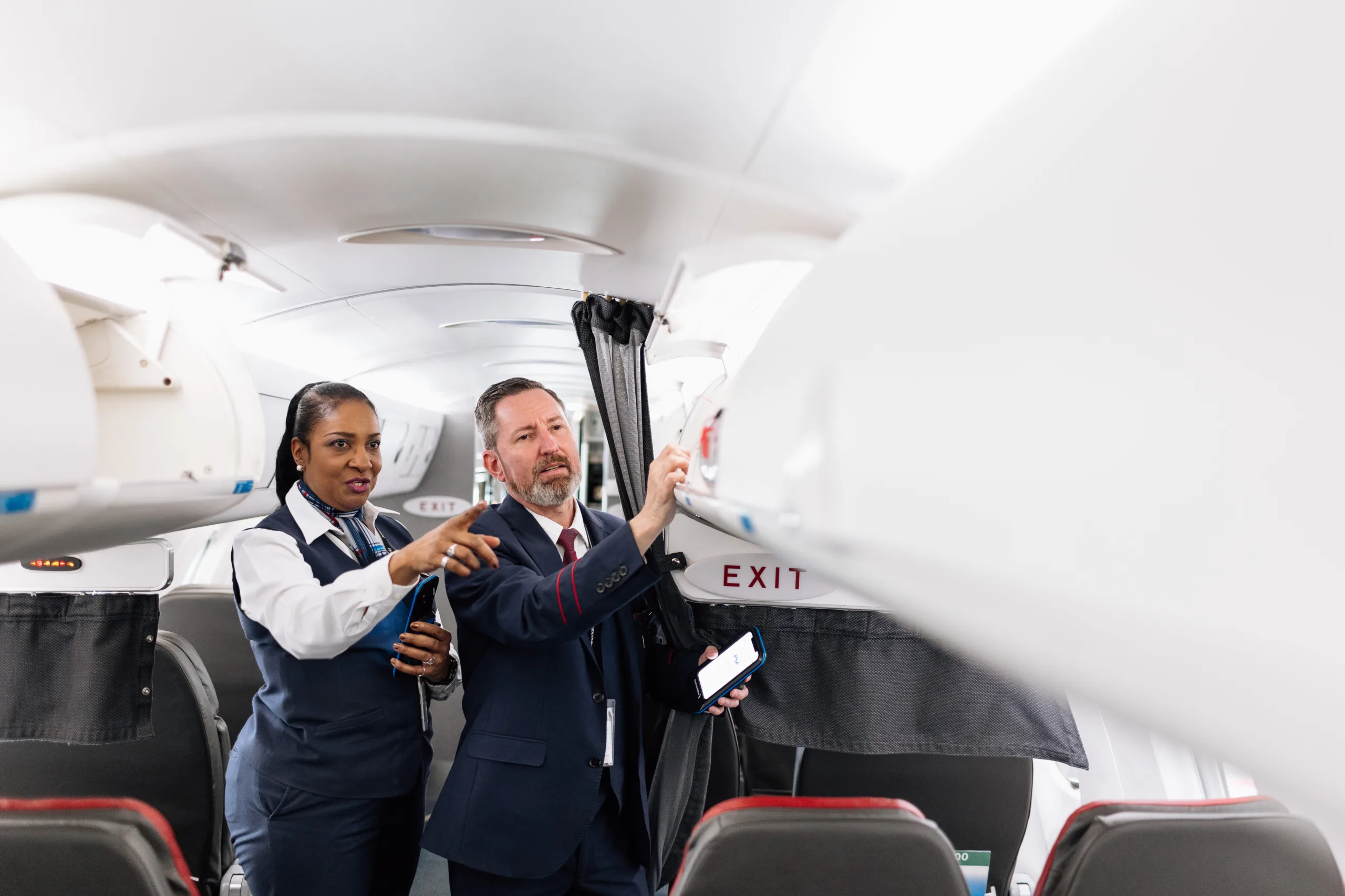
PSA operates an all-jet fleet of CRJ700 and CRJ900 aircraft. During aircraft familiarization, trainees learn the cabin layout and the locations of exits, emergency equipment, Flight Attendant stations and galley areas.
Aircraft-specific knowledge matters during routine service and emergencies. A Flight Attendant must be able to locate equipment quickly, give accurate instructions and perform assigned duties without hesitation. Familiarity with each aircraft also helps new team members move through the cabin efficiently and provide a consistent passenger experience.
Passenger Service, Communication and Teamwork
PSA Flight Attendants are safety professionals and the face of both PSA Airlines and American Airlines. Cabin crew training therefore includes customer care, passenger communication and professional conduct in addition to safety instruction.
Trainees may practice boarding duties, announcements, inflight service and responses to passenger concerns. Scenario-based exercises can help them develop calm communication, sound judgment and de-escalation skills.
Teamwork is central throughout the program. Trainees learn alongside classmates and experienced instructors while preparing to work closely with pilots, fellow Flight Attendants and ground-based team members. Strong crews communicate clearly, support one another and remain dependable during every phase of a flight.
How Hard Is It to Pass Flight Attendant Training?
Flight attendant training is demanding because the job carries serious safety responsibilities. Trainees must absorb detailed information, demonstrate practical skills and meet PSA and FAA performance standards within four weeks.
Instruction may combine classroom lessons, computer-based or written exams, practical exercises and hands-on evaluations. Trainees should expect regular study and feedback rather than assuming that attendance alone will lead to graduation.
The program is challenging, but it is designed to help qualified trainees succeed. Consistent study, punctuality, professionalism and a willingness to ask thoughtful questions can make the workload more manageable. Supporting classmates is also valuable, though every trainee remains responsible for meeting individual performance requirements.
How Can You Prepare for the Four-Week Program?
Begin by carefully reviewing every instruction and study resource PSA provides. Complete requested paperwork early and bring all required identification and employment documents.
Before traveling to Charlotte, arrange childcare, bills and other personal responsibilities that could interfere with training. Build a daily routine that allows time for class, review and adequate sleep. Organization matters when lessons move quickly.
Professional presentation is also expected. Follow the grooming and attire instructions provided by PSA, arrive early and remain prepared to participate. Most importantly, approach feedback with an open mind. Training is a chance to build new habits and learn the standards that will guide your work aboard every flight.
What Happens After Initial Training?
After completing the classroom and practical portions of training, trainees must complete the required operating experience. Successful completion of all approved training requirements, including operating experience, supports issuance of an FAA Certificate of Demonstrated Proficiency.
New Flight Attendants must be willing to accept assignment at any PSA crew base: Charlotte, Dayton, Dallas-Fort Worth, Philadelphia or Washington, D.C. Base availability depends on operational needs. Relocation or commuting may be necessary.
As new team members gain experience and seniority, they can become more familiar with bidding, scheduling and life on the line. PSA also offers advancement opportunities such as instructor, supervisor and recruiter roles.
Prepare for Takeoff with PSA Airlines
PSA’s initial flight attendant training program builds the safety knowledge, service skills and professional judgment required for a Flight Attendant career. It is an intensive four weeks, but trainees learn with support from instructors and classmates who understand the importance of working as one team.
Review current qualifications, training details and openings on PSA’s Flight Attendant careers page. If you are ready to put safety first, care for passengers and grow within the American Eagle network, PSA could be the right destination for your career.